


Overstay Lawyer in Nepal can assist foreign nationals who remain in the country beyond their authorized visa period. A visa overstay in Nepal occurs when a foreign national stays past the validity of their visa. Nepal issues different types of visas tourist visas, business visas, trekking permits, and residential permits each with a specific validity period. When a foreign national fails to leave Nepal before the expiration of their visa or does not extend it through proper legal channels, they are considered to be overstaying.
The Department of Immigration Nepal (www.immigration.gov.np) governs all immigration-related matters in Nepal, including visa issuance, extension, and enforcement. Nepal’s immigration framework operates under the Immigration Act, 2049 (1992) and the Immigration Regulations, 2051 (1994). These legal instruments define the rights and obligations of foreign nationals in Nepal and prescribe penalties for violations, including overstay.
An overstay lawyer in Nepal is a licensed legal professional who specializes in immigration law and provides legal assistance to foreign nationals who have overstayed their visa or face deportation and related legal consequences.
Why Do Foreign Nationals Overstay in Nepal?
There are several common reasons why foreign nationals overstay in Nepal. Understanding these reasons helps in building a legal defense strategy.
- Medical emergencies that prevent timely departure
- Natural disasters or unforeseen weather disruptions, especially in mountain regions
- Loss of travel documents including passports
- Miscalculation of visa duration by the visa holder
- Failure to understand Nepal’s visa extension procedure
- Flight cancellations or disruptions beyond the traveler’s control
- Business or legal disputes that require a longer stay
- Personal or family emergencies occurring while in Nepal
In many of these cases, an overstay lawyer in Nepal can present mitigating circumstances before the immigration authority or court to reduce or waive penalties.
What Are the Legal Penalties for Overstaying in Nepal?
Under the Immigration Act, 2049 (1992), overstaying in Nepal is a punishable offense. The penalties depend on the duration of the overstay and the specific circumstances of the case.
Standard Penalty Structure
| Duration of Overstay | Fine (Approximate) | Additional Consequences |
|---|---|---|
| Up to 30 days | NPR 3,000 – 5,000 | Fine and departure |
| 31 days to 6 months | NPR 5,000 – 15,000 | Fine, possible detention, deportation |
| 6 months to 1 year | NPR 15,000 – 30,000 | Fine, detention, deportation, blacklisting |
| More than 1 year | NPR 30,000+ | Mandatory detention, deportation, entry ban |
These figures are approximate and subject to change based on the nationality of the overstaying individual and the discretion of immigration officers. The Department of Immigration Nepal has the authority to impose fines, detain the individual, initiate deportation proceedings, and blacklist the individual from re-entering Nepal.
Beyond financial penalties, an overstay can result in:
- Deportation from Nepal
- Blacklisting — which prevents future entry into Nepal
- Criminal charges under the Immigration Act
- Detention at immigration facilities prior to deportation
- Complications for future visa applications to Nepal and other countries
What Does an Overstay Lawyer in Nepal Do?

An overstay lawyer in Nepal provides a range of specialized legal services to foreign nationals caught in immigration violations. These services include but are not limited to the following:
1. Legal Consultation and Case Assessment
An immigration lawyer will first assess the full facts of the overstay situation. They will review the visa type, the duration of overstay, the reason for the overstay, and the current immigration status of the client.
2. Representation Before the Department of Immigration
The lawyer will act as a legal representative before the Department of Immigration Nepal. They will present the case on behalf of the client, submit supporting documents, and negotiate fines or penalties.
3. Filing for Visa Extension or Regularization
In cases where the overstay is recent and circumstances are justifiable, the lawyer may file for a visa extension or regularization of the stay. This is processed through the Department of Immigration located in Maitighar, Kathmandu.
4. Challenging Deportation Orders
If a deportation order has been issued, the overstay lawyer can file a legal challenge before the appropriate authority. Under the Immigration Act, 2049, a person subject to deportation has the right to legal representation.
5. Removal from Blacklist
If a foreign national has already been blacklisted by Nepal immigration, the lawyer can initiate proceedings to apply for removal from the blacklist. This process involves filing a formal application with supporting documentation to the Department of Immigration.
6. Legal Defense in Criminal Proceedings
In cases where criminal charges have been filed under the Immigration Act, the lawyer provides full legal defense before the District Court or High Court as applicable.
What Documents Are Needed When Consulting an Overstay Lawyer in Nepal?
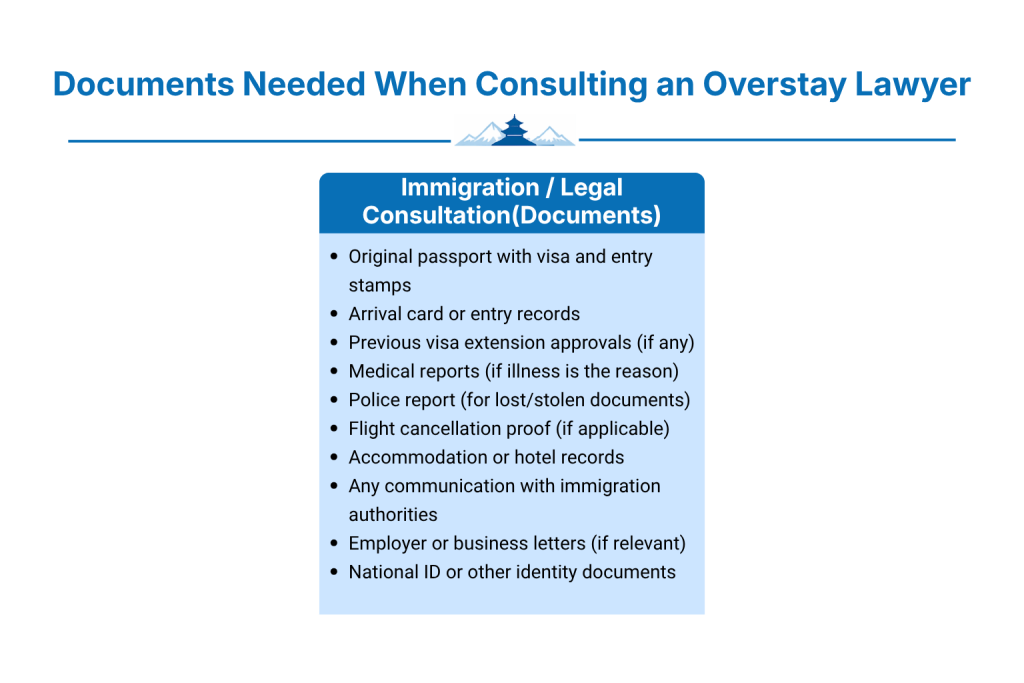
When you meet with an overstay lawyer in Nepal, you should bring the following documents:
- Original passport with visa stamp and entry record
- Arrival card or customs declaration form
- Any prior visa extension approvals received from immigration
- Medical records or hospital reports (if medical emergency is the reason)
- Police report (in case of document loss or theft)
- Flight cancellation receipts or airline correspondence (if applicable)
- Hotel records or accommodation documents
- Any written communication with immigration authorities
- Letters from employer or business (in case of business overstay)
- Legal identity documents such as national ID card
How to Find a Qualified Overstay Lawyer in Nepal?
Finding the right immigration lawyer in Nepal requires careful consideration. Not every lawyer in Nepal specializes in immigration law. When looking for an overstay lawyer, consider the following steps:
Step 1: Visit the Nepal Bar Association (www.nepalbar.org.np) to verify the lawyer’s registration and license status.
Step 2: Look for lawyers or law firms that specifically list immigration law, visa law, or foreigner legal services as their practice area.
Step 3: Check whether the lawyer has handled previous cases involving the Department of Immigration Nepal or Ministry of Home Affairs Nepal (www.moha.gov.np).
Step 4: Inquire about the lawyer’s experience with cases involving nationals from your specific country, as bilateral agreements between Nepal and other nations may affect your legal options.
Step 5: Request a detailed breakdown of legal fees before retaining the lawyer. Immigration law fees in Nepal vary widely based on case complexity.
Step 6: Ensure the lawyer is fluent in both Nepali (for court and immigration proceedings) and English (for communication with foreign clients).
What Is the Process to Resolve an Overstay Case in Nepal?

The process to resolve an overstay case in Nepal generally follows this structured path:
Step 1: Voluntary Disclosure
Go to the Department of Immigration Nepal voluntarily and disclose the overstay. Voluntary disclosure often results in reduced penalties compared to being caught during a police check or airport screening.
Step 2: Hire an Overstay Lawyer
Retain a qualified overstay immigration lawyer in Nepal before making any formal statement to immigration authorities.
Step 3: Case Assessment
Your lawyer will assess the timeline, documents, and reasons for the overstay and prepare a legal defense or justification.
Step 4: Document Submission
Submit all required documents to the Department of Immigration along with a formal written explanation of the overstay.
Step 5: Fine Payment
Pay the prescribed fine as determined by the immigration authority. Your lawyer can negotiate the fine amount in cases of genuine hardship or emergency.
Step 6: Exit or Regularization
Once the fine is paid and the matter is resolved, either exit Nepal legally or apply for a visa regularization/extension if eligible.
Step 7: Follow-Up on Blacklist Status
Ask your lawyer to confirm whether you have been added to Nepal’s blacklist. If yes, initiate removal proceedings before your next planned visit to Nepal.
Legal Framework Governing Overstay in Nepal
Nepal’s immigration system is governed by a defined legal framework. Understanding this framework is helpful for any foreign national dealing with an overstay situation.
| Legal Instrument | Year | Governing Authority |
|---|---|---|
| Immigration Act (Aagaman Sambandhi Ain) | 2049 BS (1992 AD) | Department of Immigration |
| Immigration Regulations | 2051 BS (1994 AD) | Ministry of Home Affairs |
| Foreign Investment and Technology Transfer Act | 2075 BS (2019 AD) | Investment Board Nepal |
| National Parks and Conservation Areas Act | 2029 BS (1973 AD) | Restricted Area Permits |
The Ministry of Home Affairs Nepal oversees the Department of Immigration and holds the final authority on deportation, blacklisting, and entry bans. All appeals against deportation orders are filed through the legal system under the relevant provisions of the Immigration Act, 2049.
Can an Overstay Be Forgiven in Nepal?
Yes, in certain circumstances, an overstay can be excused or penalties can be reduced. The Department of Immigration Nepal has discretionary authority to forgive or reduce penalties when:
- The overstay resulted from a documented medical emergency
- Natural calamities or force majeure circumstances caused the delay
- The individual was a minor at the time of overstay
- The overstay was less than 72 hours and occurred due to flight disruptions
- The foreign national has a long, clean immigration history in Nepal
An overstay lawyer in Nepal can prepare and present the appropriate documentation to apply for penalty reduction under these circumstances. However, there is no absolute guarantee of forgiveness, and each case is decided on its own facts.
Frequently Asked Questions (FAQs)
1. What is the fine for overstaying a visa in Nepal?
The fine for overstaying a visa in Nepal varies by duration. Short overstays may attract fines of NPR 3,000 to 5,000. Longer overstays can result in fines exceeding NPR 30,000, detention, and deportation under the Immigration Act, 2049.
2. Can I extend my Nepal visa after it has expired?
You generally cannot extend a visa after it has expired. However, an overstay lawyer in Nepal can approach the Department of Immigration to negotiate a regularization or seek special permission in cases involving genuine emergencies or unavoidable circumstances.
3. Will overstaying in Nepal get me blacklisted?
Yes, overstaying in Nepal can result in blacklisting by the Department of Immigration. Blacklisted individuals are barred from re-entering Nepal. A lawyer can file a formal application to the Department of Immigration to request removal from the blacklist.
4. How long does it take to resolve an overstay case in Nepal?
Simple overstay cases with minor durations and clear justifications can be resolved within a few days. Complex cases involving deportation orders, blacklisting, or criminal charges may take several weeks to months depending on the proceedings involved.
5. Do I need a lawyer for a minor overstay in Nepal?
Even for a minor overstay, having an overstay lawyer in Nepal is advisable. A lawyer ensures correct documentation, proper communication with authorities, protection of your legal rights, and minimization of penalties or long-term immigration consequences.
6. Where is the Department of Immigration Nepal located?
The Department of Immigration Nepal is located at Maitighar, Kathmandu. Their official website is www.immigration.gov.np. They handle all visa extensions, overstay matters, deportation proceedings, and blacklist inquiries.