


Nepal receives millions of foreign visitors each year for tourism, trekking, business, and work purposes. With this volume of foreign nationals entering the country, immigration violations such as Immigration Detention Overstay in Nepal are not uncommon. Understanding the legal framework surrounding immigration detention and overstay penalties in Nepal is essential for every foreigner residing in or visiting the country.
This article covers everything you need to know about overstaying a visa in Nepal, the legal consequences, the role of the Department of Immigration Nepal, and how the detention process works under Nepali immigration law.
What Is a Visa Overstay in Nepal?
A visa overstay in Nepal occurs when a foreign national remains in the territory of Nepal beyond the authorized period granted by their visa or entry permit. Every visa issued to a foreigner whether a tourist visa, business visa, non-tourist visa, or residential visa carries a specific validity period and an authorized duration of stay.
When a foreign national fails to depart Nepal before their authorized stay expires, they are legally considered to be overstaying. This is a direct violation of Nepal’s immigration regulations and carries serious legal consequences, including fines, detention, deportation, and in severe cases, blacklisting from future entry into Nepal.
The primary law governing this area is the Immigration Act, 2049 (1992) and its associated regulations, the Immigration Regulations, 2051 (1994). These laws are administered by the Department of Immigration (DoI) under the Ministry of Home Affairs, Government of Nepal.
- Official Website: Department of Immigration Nepal
Legal Framework Governing Immigration in Nepal
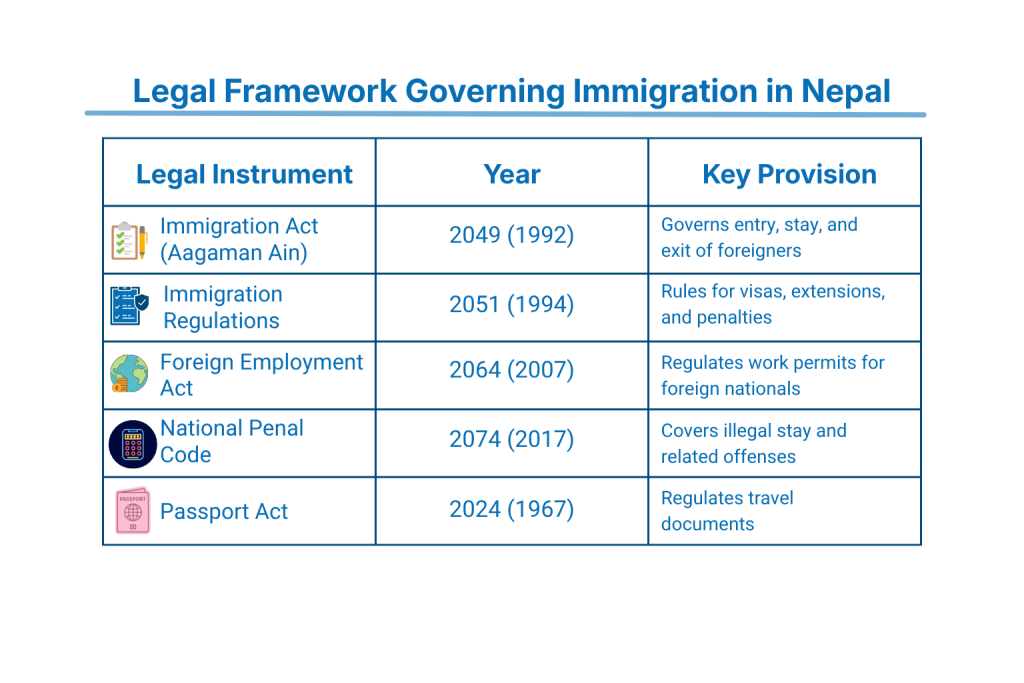
Nepal’s immigration system operates under a well-defined legal structure. The following laws and regulations directly govern visa overstay, immigration detention, and related matters:
| Legal Instrument | Year | Key Provision |
|---|---|---|
| Immigration Act (Aagaman Ain) | 2049 (1992) | Primary law on entry, stay, and exit of foreigners |
| Immigration Regulations | 2051 (1994) | Detailed rules on visa categories, extensions, and penalties |
| Foreign Employment Act | 2064 (2007) | Governs work permits for foreign nationals |
| National Penal Code | 2074 (2017) | Covers criminal offenses including illegal stay |
| Passport Act | 2024 (1967) | Regulates travel documents |
Under Section 9 of the Immigration Act, 2049, any foreigner who stays in Nepal beyond the permitted period is subject to legal action. The Department of Immigration holds the authority to take action against illegal overstay, impose fines, and initiate deportation proceedings.
What Are the Types of Visas in Nepal and Their Duration?
Before understanding overstay, it is necessary to understand the visa categories and their permitted duration of stay in Nepal.
Common Visa Types in Nepal
- Tourist Visa: Available on arrival or through Nepali embassies. Issued for 15, 30, or 90 days (multiple entries allowed within a calendar year, not exceeding 150 days total)
- Business Visa: Issued for those conducting business activities. Duration varies.
- Non-Tourist Visa: Covers students, researchers, journalists, NGO workers, etc.
- Diplomatic/Official Visa: For government officials
- Residential Visa: For long-term residents, including foreigners married to Nepali citizens
- Work Permit Visa: Combined with work permit from Department of Labour
The tourist visa is the most common visa type and has a strict aggregate stay limit of 150 days in a single calendar year for most nationalities.
What Happens When You Overstay Your Visa in Nepal?
When a foreigner overstays their visa in Nepal, the consequences depend on the duration of the overstay and the circumstances surrounding it.
Immediate Consequences of Overstay
The Department of Immigration Nepal has authority to:
- Impose a monetary fine for every day of overstay
- Detain the foreigner at an immigration detention facility
- Initiate deportation proceedings
- Blacklist the foreign national from entering Nepal in the future
- Notify the respective embassy or consulate of the foreign national
Overstay Fines in Nepal
Under the Immigration Regulations, 2051, foreigners who overstay their authorized period of stay are subject to a fine. The standard fine applied by the Department of Immigration is:
| Duration of Overstay | Fine Amount (Approximate) |
|---|---|
| 1 to 7 days | NPR 200 per day |
| 8 to 30 days | NPR 300 per day + additional processing fee |
| More than 30 days | Higher fine + possible detention and deportation |
| Intentional or repeated violation | Detention + Deportation + Blacklisting |
Note: Fine amounts may be revised by the Department of Immigration. Always check the official DoI website for current rates.
Paying the overstay fine does not automatically exempt the foreigner from other legal actions. The immigration officer has discretionary authority to take additional measures based on the severity of the violation.
What Is Immigration Detention in Nepal?
Immigration detention in Nepal refers to the administrative or legal confinement of a foreign national who has violated immigration laws. Detention is used as a coercive and punitive measure by the Department of Immigration and law enforcement authorities.
Who Can Be Detained?
A foreign national in Nepal can be detained under immigration law in the following circumstances:
- Visa overstay beyond a permitted period without a valid reason
- Entering Nepal illegally without a valid visa or through unauthorized entry points
- Working in Nepal without a valid work permit
- Providing false or misleading information to immigration authorities
- Being involved in activities prohibited under the visa category granted
- Previous deportation orders that were not complied with
Legal Basis for Detention
Under Section 13 of the Immigration Act, 2049, immigration officers have the authority to arrest and detain any foreigner who violates provisions of the Act. This includes foreigners who overstay their visa, engage in unauthorized activities, or fail to comply with immigration orders.
The Nepal Police also works in coordination with the Department of Immigration to apprehend and detain foreign nationals found to be in violation of immigration laws.
The Immigration Detention Process in Nepal

The detention process in Nepal follows a procedural sequence. Below are the steps involved:
Step-by-Step: Immigration Detention Process
- Detection of Violation: The Department of Immigration or Nepal Police identifies an immigration violation (e.g., overstay, illegal stay, unauthorized work).
- Apprehension: The foreign national is taken into custody by immigration officers or police.
- Documentation Check: Immigration officers verify all travel documents, including passport, visa, and entry stamps.
- Formal Questioning: The detained individual is questioned about the circumstances of the violation.
- Filing of Report: A formal report is filed with the Department of Immigration detailing the nature of the violation.
- Fine Imposition: Applicable fines for overstay or other violations are calculated and imposed.
- Legal Representation: The detained foreigner has the right to contact their embassy or consulate and seek legal representation.
- Decision on Deportation or Release: Depending on the severity of the violation, the authorities either release the individual upon payment of fine or proceed with deportation.
- Deportation: If ordered, the individual is deported to their home country, often with a blacklisting order that prevents future entry.
What Are the Rights of a Detained Foreigner in Nepal?

Even as a foreigner detained under immigration law in Nepal, certain fundamental rights are protected under Nepal’s constitution and international obligations.
Rights During Immigration Detention
- Right to be informed of the reason for detention
- Right to contact the embassy or consulate of their home country
- Right to legal representation (right to hire a lawyer)
- Right against torture or inhumane treatment under Article 22 of the Constitution of Nepal, 2072 (2015)
- Right to a fair hearing before deportation orders are finalized
- Right to appeal decisions made by the Department of Immigration
Nepal is a signatory to several international conventions that protect the rights of detained individuals, including provisions under the United Nations Convention Against Torture (UNCAT).
How to Avoid Visa Overstay in Nepal
Prevention is always better than dealing with the legal consequences of overstaying a visa in Nepal. Here are the steps foreigners should take:
Practical Steps to Avoid Overstay
- Check visa validity carefully upon arrival and note the exact date of authorized stay
- Apply for visa extension well before the expiry date at the Department of Immigration, Maitighar, Kathmandu
- Apply for a visa extension at district immigration offices in Pokhara, Chitwan, and other locations
- Keep copies of all immigration documents including entry stamps, visa papers, and extension approvals
- Track your total days of stay if you are on a tourist visa (maximum 150 days per calendar year)
- Contact the Department of Immigration immediately if you face circumstances beyond your control (medical emergency, natural disaster, etc.) that prevent timely departure
The Department of Immigration Nepal provides a grace period consideration in genuine cases of emergency, provided the foreigner reports proactively.
Can Foreigners Extend Their Visa in Nepal?
Yes. Foreign nationals in Nepal can apply for a visa extension at the Department of Immigration. The extension must be applied for before the current visa expires.
Documents Required for Visa Extension
- Original passport with valid visa
- Completed visa extension application form
- Passport-sized photographs
- Extension fee payment receipt
- Supporting documents (hotel registration, recommendation letter, etc.) depending on the visa type
Failure to extend the visa on time results in automatic overstay and the associated penalties.
What Is Blacklisting in Nepali Immigration Context?
Blacklisting is one of the most severe consequences of immigration violations in Nepal. When a foreigner is blacklisted by the Department of Immigration, they are permanently or temporarily barred from entering Nepal.
Blacklisting occurs in the following situations:
- Serious or repeated visa overstay
- Illegal work or business activities without proper authorization
- Involvement in criminal activities during stay in Nepal
- Non-compliance with deportation orders
- Providing fraudulent documents to immigration authorities
Once blacklisted, the foreign national’s name is entered into the immigration database, and entry into Nepal is denied at all ports of entry.
Conclusion
Immigration detention and visa overstay in Nepal are serious legal matters governed by the Immigration Act, 2049 and Immigration Regulations, 2051. Every foreign national visiting or residing in Nepal must strictly adhere to the conditions of their visa, including the permitted duration of stay. The Department of Immigration Nepal actively enforces these regulations, and violations can result in significant fines, detention, deportation, and blacklisting. When in doubt, always consult the Department of Immigration Nepal or seek legal advice from a qualified immigration lawyer in Nepal.
Frequently Asked Questions (FAQs)
1. What is the fine for overstaying a visa in Nepal?
The fine for visa overstay in Nepal is approximately NPR 200 per day for the first 7 days and NPR 300 per day for longer periods. Additional penalties, including deportation, may apply for extended overstays.
2. Can I be deported from Nepal for overstaying my visa?
Yes. Under the Immigration Act, 2049, the Department of Immigration has full authority to deport any foreigner who overstays their visa, particularly in cases of extended or intentional overstay.
3. What should I do if I accidentally overstay my visa in Nepal?
You should immediately report to the Department of Immigration Nepal at Maitighar, Kathmandu. Pay the applicable fine, explain your situation honestly, and request legal guidance to regularize your status before departure.
4. Can I extend my visa inside Nepal to avoid overstay?
Yes. You can apply for a visa extension at the Department of Immigration before your current visa expires. Tourist visas can be extended up to the maximum limit of 150 days per calendar year.
5. Does overstay in Nepal lead to permanent blacklisting?
Not always. Minor overstays with payment of fines may not result in permanent blacklisting. However, serious violations, repeated overstays, or involvement in criminal activities can lead to permanent or long-term blacklisting from Nepal.
6. Which authority handles immigration detention in Nepal?
The Department of Immigration Nepal, under the Ministry of Home Affairs, handles all matters related to immigration detention, overstay penalties, deportation, and blacklisting in Nepal. Nepal Police assists in enforcement.